About this place
Copper, international trade and mining history through interactive media
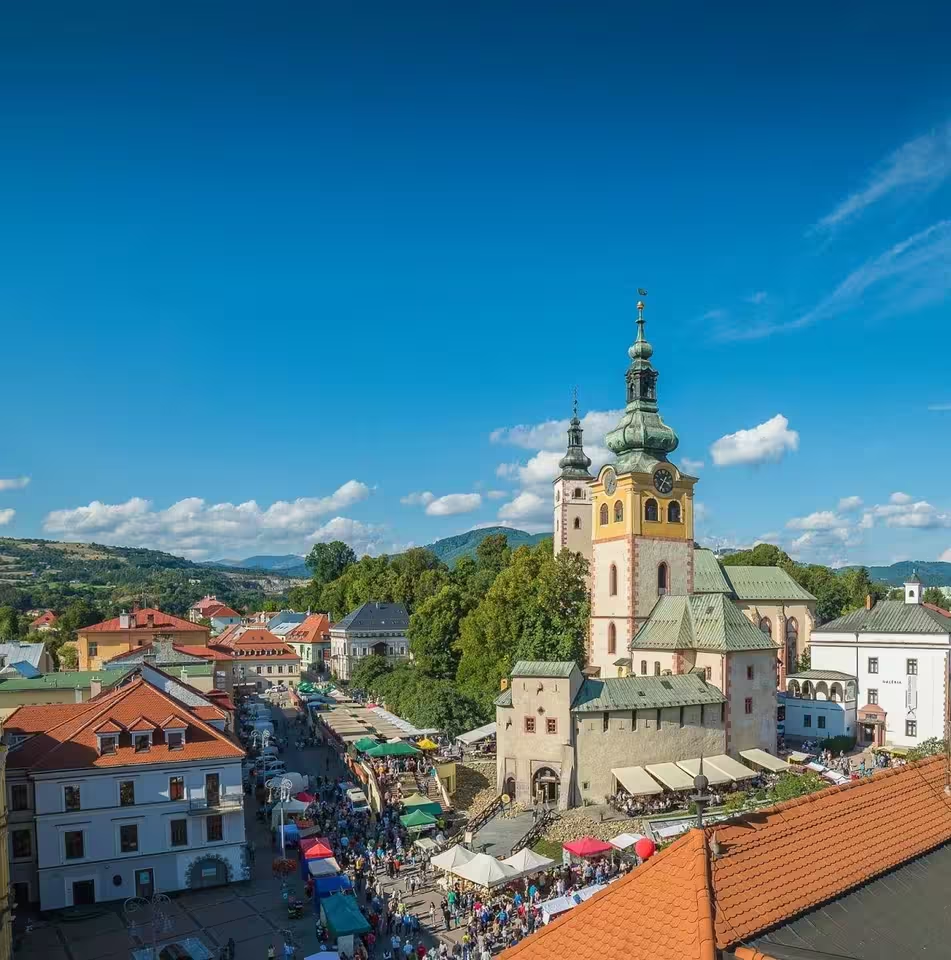
The Thurzo–Fugger Interactive Exhibition occupies the first floor of the Barbican in Banská Bystrica’s Town Castle. It presents more than five centuries of regional mining and copper processing, with particular attention to the Thurzo–Fugger enterprise and the Copper Hammer Mill. Historical objects and models are combined with digital interpretation to connect the city with mines, processing sites and trading routes across Europe.
Essential experiences
What to look for during your visit
4 highlights
01
Augmented-reality timeline and talking historical portraits
02
Virtual-reality reconstruction of the Copper Hammer Mill
03
360-degree video projection and interactive smelting game
04
Historic copper plates, mining models and the Red Gold collection
History and context
A place shaped across centuries
At the turn of the fifteenth and sixteenth centuries, Ján Thurzo and Jakob Fugger developed an extensive copper enterprise that linked ore extraction, technical knowledge, processing, finance and international distribution. Banská Bystrica and its Copper Hammer Mill became important parts of this network. The exhibition places that enterprise within the wider mining landscape of Špania Dolina, Staré Hory, Moštenica, Ľubietová, Tajov and Malachov, and connects it with the international European Fugger Route.
Visitor experience
What to expect when you arrive
A smartphone-supported augmented-reality timeline leads through the stages of regional mining history. Talking portraits introduce historical figures including Ján Thurzo and Jakob Fugger, while touchscreens, a three-player smelting game, a motion platform and virtual reality reconstruct work inside the Copper Hammer Mill. A 360-degree video projection compares the industrial site today with its appearance more than 500 years ago. Displays also include historic copper plates, mining models and the Red Gold collection of more than 80 vessels associated with the metalworking tradition of Špania Dolina.
Gallery
A closer look
5 photographs
Practical information
Plan your visit
Address
Námestie Štefana Moysesa 52/26, 974 01, Banská Bystrica
Opening information
Open daily. July–August: 10:00–18:00, with the last entry at 17:00. September–June: 09:00–17:00, with the last entry at 16:00. Entry normally begins every 30 minutes. Public access can be interrupted when time slots are fully occupied by booked groups, so check the current closure notices before visiting.
Best time to visit
The exhibition is suitable throughout the year. Reserve in advance during weekends, holidays and group-travel periods because each half-hour entry is limited to 10 people and booked groups can temporarily close public time slots.
Getting there
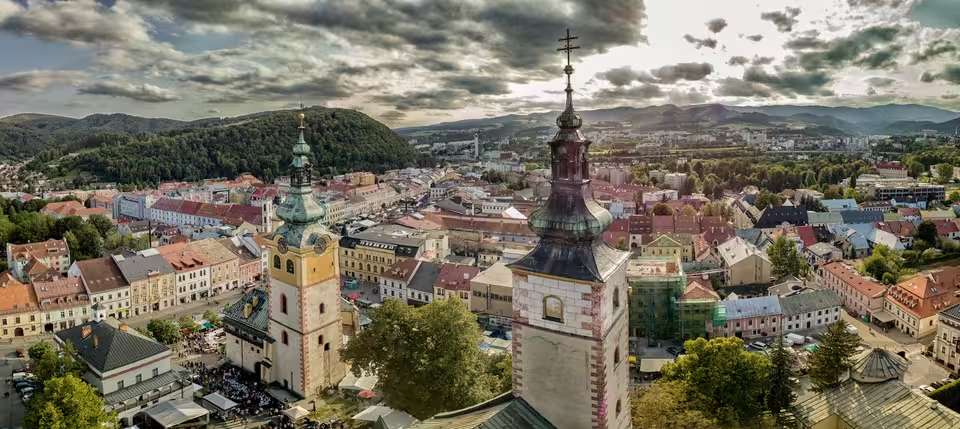
The exhibition is on the first floor of the Barbican at Námestie Štefana Moysesa 52/26. Enter from the rear side of the building near the well. The Barbican is in the Town Castle precinct, a short uphill walk from SNP Square and the Clock Tower.
Accessibility and terrain
The exhibition occupies the first floor of a historic Barbican building and uses several immersive and screen-based installations. Visitors who require step-free access, seating, sensory assistance or help using the interactive technology should confirm the current arrangements with the operator before booking.
Know before you go
Allow 1.5–2 hours for the complete interactive visit; the stated minimum is one hour. Capacity is limited to 10 visitors per entry. Standard admission is €6 for adults, €3 reduced and €13 for a family ticket. Group entries and guided visits should be arranged by phone.
Combine it with
Continue exploring nearby
Explore the rest of the Town Castle precinct, then continue to SNP Square and the Clock Tower. The exhibition also provides context for later trips to Špania Dolina, Staré Hory and Ľubietová.