
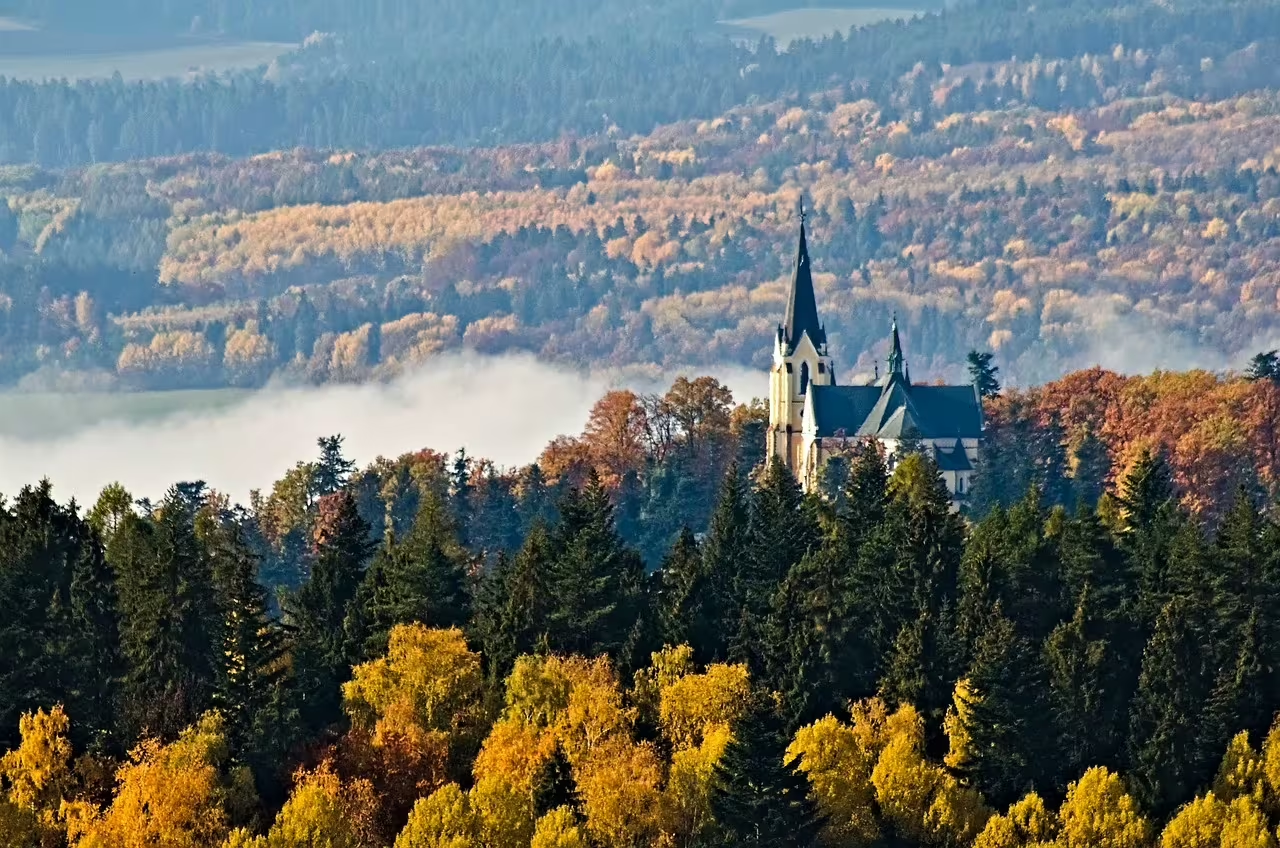
Eastern Slovakia's Spiš region packs an unusual concentration of protected heritage into a small area, anchored by one of the largest castle ruins in Central Europe and rounded out by a walled church settlement and a free royal town with its own moated castle-museum.
Spiš Castle
Rising over Spišské Podhradie, Spiš Castle covers more than 4 hectares on its hilltop site, with construction dating to the start of the 12th century. It's inscribed onto the UNESCO World Heritage list alongside the town beneath it and the nearby Spišská Kapitula, giving the whole area a single, connected listing rather than three separate ones.
Spišská Kapitula
A short walk from Spišské Podhradie, Spišská Kapitula is a completely different kind of site: a walled ecclesiastical settlement built around a single medieval street, documented since 1235 and still centred on its Late Romanesque St. Martin's Cathedral. It's an easy, compact addition to a Spiš Castle visit rather than a separate trip.
Kežmarok
About 30 minutes further north, Kežmarok pairs two very different sites: Kežmarok Castle, a moated fortress turned town museum since 1931, and the Wooden Articular Church of the Holy Trinity, built in 1717 entirely without metal fixings and inscribed onto the UNESCO World Heritage list in 2008 as part of the Wooden Churches of the Slovak Carpathians.
Planning the trail
All three stops sit within roughly 40 minutes' drive of each other, making a car the easiest way to link them in a single day or a relaxed two-day trip. Spiš Castle keeps the longest hours in peak summer and considerably shorter hours outside it, so it's worth building a visit around its current season rather than assuming daily access.
Further reading
For the official listing details behind the Spiš Castle and Spišská Kapitula sites, UNESCO's entry for Levoča, Spišský Hrad and the Associated Cultural Monuments is the definitive source.