About this place
A rock-top fortress 112 metres above the Orava River
A castle first documented from the mid-13th century, built on a rock 112 metres above the Orava River as a border fortress, now home to the Orava Museum's historical, ethnographic and natural-history collections.
Essential experiences
What to look for during your visit
4 highlights
01
Climb the steep path from the village to the castle gate, 112m above the river
02
Tour the Orava Museum's historical, ethnographic and natural-history exhibitions
03
Take in views over the Orava River valley from the castle's upper courtyards
04
Photograph the castle from the riverside road below, a classic Slovak postcard view
History and context
A place shaped across centuries
Orava Castle is first documented from the mid-13th century, built on a limestone outcrop as a border fortress guarding the trade route north into Poland. The village below, Oravský Podzámok, developed purely as a service settlement for the castle estate and only gained administrative independence in the second half of the 19th century. The castle now houses the Orava Museum, which has run its collections here for decades.
Visitor experience
What to expect when you arrive
The Orava Museum's exhibitions inside the castle cover the region's history, traditional Orava folk culture, and natural history, spread across multiple levels connected by the castle's original stairways and courtyards. The steep approach on foot from the village below builds toward wide views over the Orava River valley from the upper courtyards.
Gallery
A closer look
5 photographs
Practical information
Plan your visit
Address
Oravský hrad, Administratívna budova č. 2, 027 41, Oravský Podzámok
Best time to visit
May to September gives the longest daily opening hours. November to February hours are considerably shorter.
Getting there
The castle sits directly above Oravský Podzámok village, on the main road between Dolný Kubín and Trstená. The climb from the village car park to the castle gate takes roughly 10 to 15 minutes on foot.
Accessibility and terrain
The approach path and internal stairways are steep and uneven in places, making the castle difficult for wheelchair users or those with limited mobility.
Combine it with
Continue exploring nearby
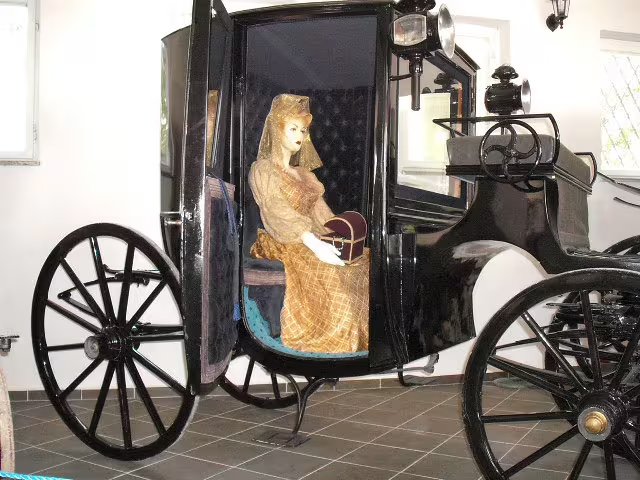
The village of Oravský Podzámok itself is small and walkable, with a summer-season collection of historic carriages on display nearby.