Stará Ľubovňa was first mentioned as 'Libenow' in 1292 and granted town privileges by Louis the Great in 1342, but its most distinctive chapter ran from 1412 to 1772: for 360 years, the town and its castle were pledged to Poland as security against a loan to the Hungarian crown, serving as the seat of a Polish starostwo (administrative district) before reverting to Hungary during the First Partition of Poland.
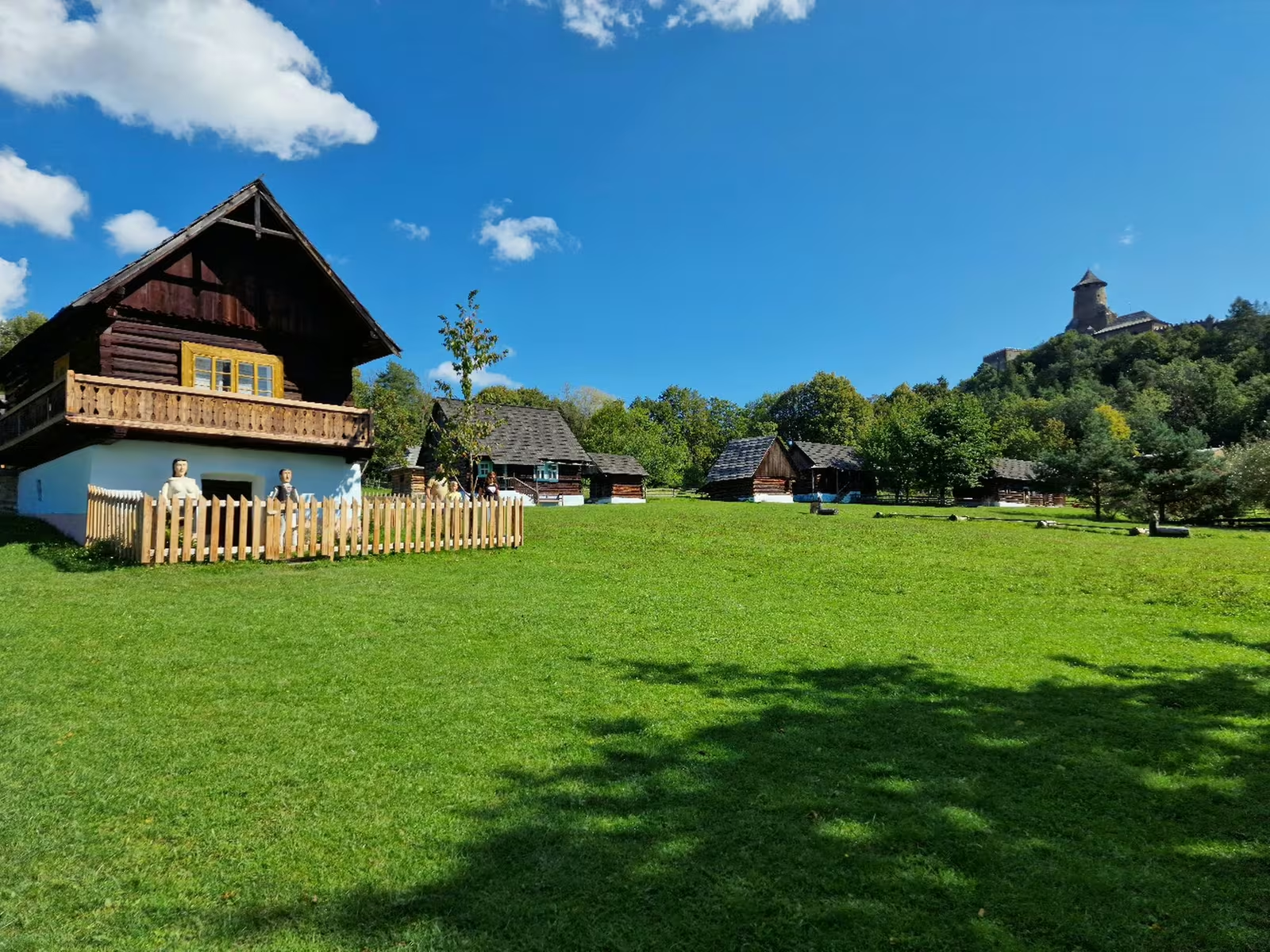
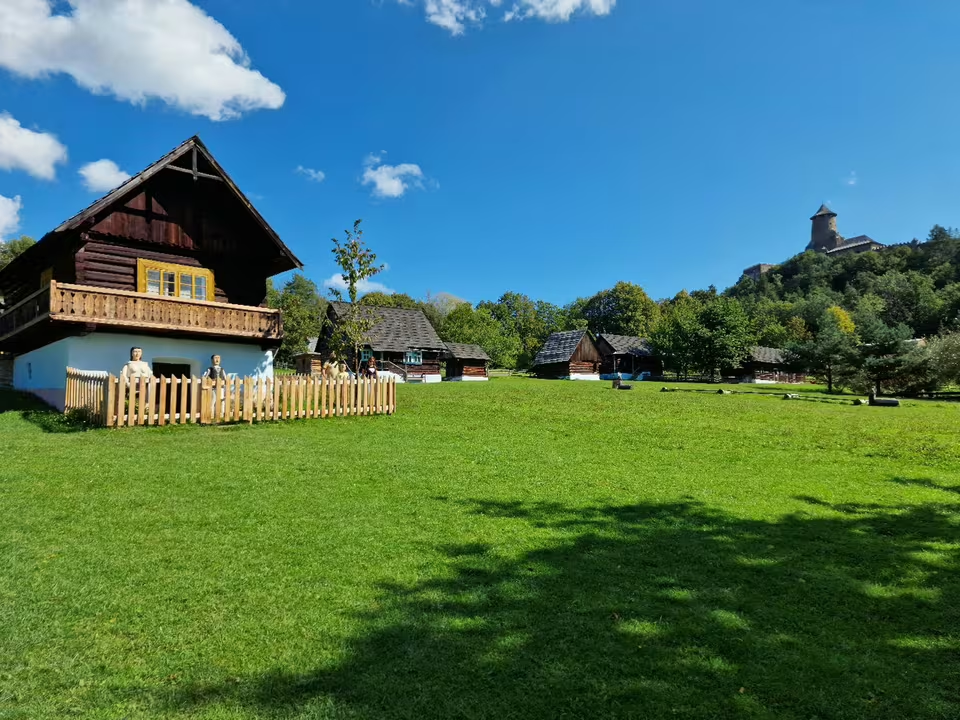
Ľubovnianský hrad, construction of which dates to the turn of the 13th and 14th centuries, hosted a 1412 diplomatic meeting between King Sigismund of Hungary and King Władysław Jagiełło of Poland, and reportedly sheltered the Polish crown jewels for safekeeping between 1655 and 1661. An adjoining open-air folk museum, opened in 1985, recreates the region's Ruthenian, Goral, German, Jewish and Roma heritage through reconstructed buildings, including a wooden 1833 Greek Catholic church relocated from the village of Matysová.

 Attractions and landmarks