Attractions and landmarks
Beckov Castle
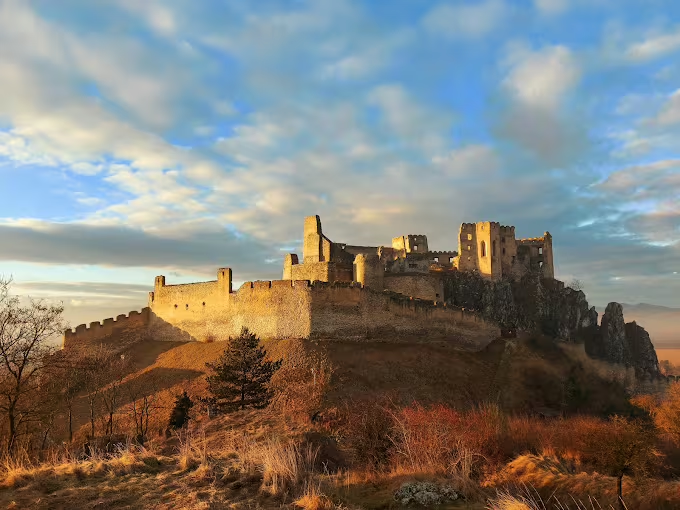
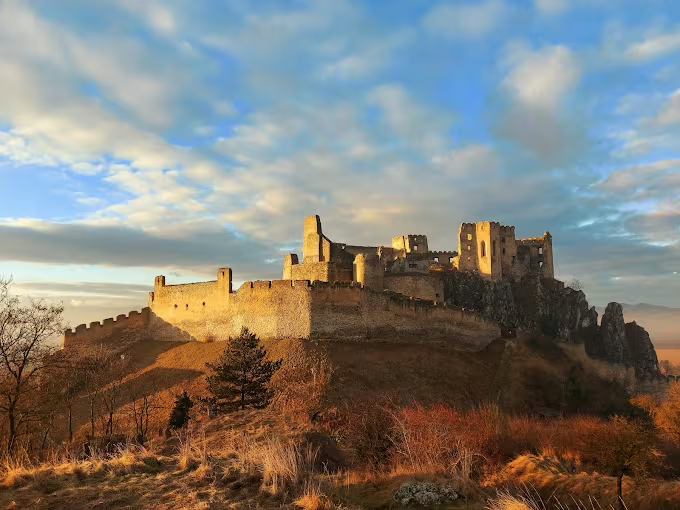
A dramatic ruin atop a 50-metre cliff, first mentioned in 1200 and successfully fortified against Ottoman attack.
Trenčín Region, Slovakia
A small Váh valley village beneath a dramatic cliff-top castle ruin, first mentioned in 1200 and once fortified against Ottoman attack.
Beckov Castle was first mentioned in 1200 as royal property, later falling under the control of the powerful oligarch Matúš Čák at the end of the 13th century. The Bánffy family converted it into a Renaissance residence and successfully fortified it against Ottoman attack in the late 16th century, one of relatively few Slovak castles that held out against Ottoman assault, before a fire in 1729 left it the ruin visible today. Its position atop a sheer 50-metre cliff directly above the village makes it one of the most photographed castle silhouettes in Slovakia.
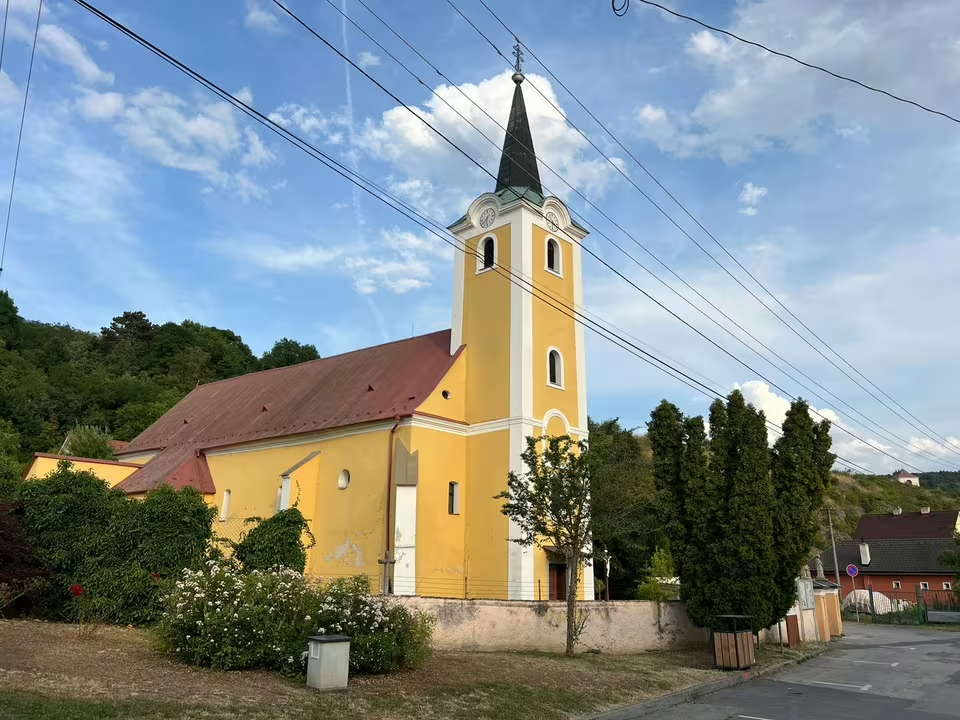
Below the castle, the village's Roman Catholic Parish Church of St. Stephen the King is Beckov's oldest surviving sacred building, a Gothic single-nave structure with a polygonal presbytery built between 1400 and 1410 under the rule of the nobleman Stibor, whose family held the castle at the time. Both the castle and the church are protected as National Cultural Monuments.

Attractions, activities and experiences kept separate from stays and dining.
Attractions and landmarks
A dramatic ruin atop a 50-metre cliff, first mentioned in 1200 and successfully fortified against Ottoman attack.
Attractions and landmarks
Beckov's oldest surviving sacred building, a Gothic church built 1400–1410 under nobleman Stibor's rule.
Half a day
April to September gives the longest daily opening hours at the castle; it opens weekends only in February and March and keeps reduced hours in deep winter.
Beckov is a small village, walkable in full, with the castle reached by a marked path climbing roughly 5 minutes from the village centre. Beckov sits just off the main road between Trenčín and Nové Mesto nad Váhom, both a short drive away.