Central Europe's most expansive fortification system
A fortification system combining a 16th-century Old Fortress and 17th-century New Fortress additions at the confluence of the Danube and Váh rivers, often described as the most expansive such system in Central Europe.
What to look for during your visit
4 highlightsExplore the 16th-century Old Fortress and 17th-century New Fortress additions
Walk extensive ramparts, gates and courtyards along the Danube
Learn how the fortress survived the 1920 split of Komárno and Hungary's Komárom
Understand the site's strategic role at the Danube-Váh confluence
A place shaped across centuries
Komárno's fortress system developed from the 16th-century Old Fortress, expanded through the 17th century with the New Fortress, defending the strategic confluence of the Danube and Váh rivers. The complex became town property in 2003 and has undergone gradual restoration since, surviving the town's 1920 split by the Treaty of Trianon into Slovak Komárno and Hungarian Komárom intact.
What to expect when you arrive
Visitors can explore extensive ramparts, gates and courtyards across both fortress sections, giving a strong sense of the scale of Danube-frontier military engineering across two centuries of expansion.
A closer look
6 photographsPlan your visit
Address
Hradná, Stará pevnosť, 945 01, Komárno
Best time to visit
Open year-round; summer adds riverside walks along the Danube.
Getting there
The fortress sits within walking distance of central Komárno, close to the Danube riverbank.
Accessibility and terrain
Some ramparts and historic surfaces are uneven; check locally for step-free routes if needed.
Combine it with
Continue exploring nearby
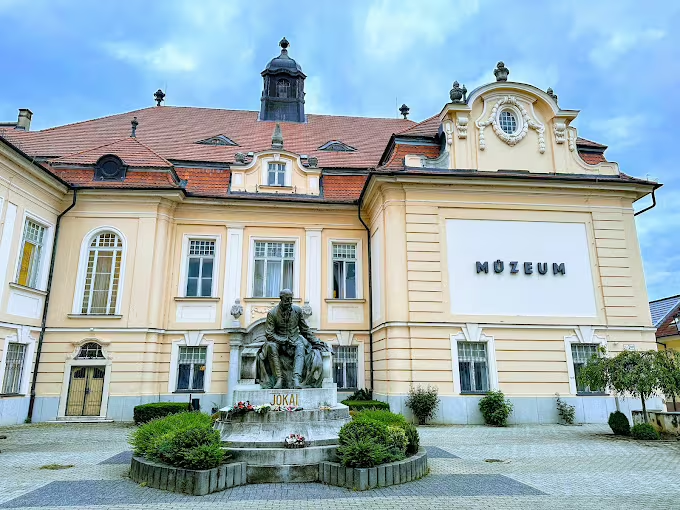
The Danube Region Museum, one of Slovakia's oldest museums, lies a short walk away in central Komárno.