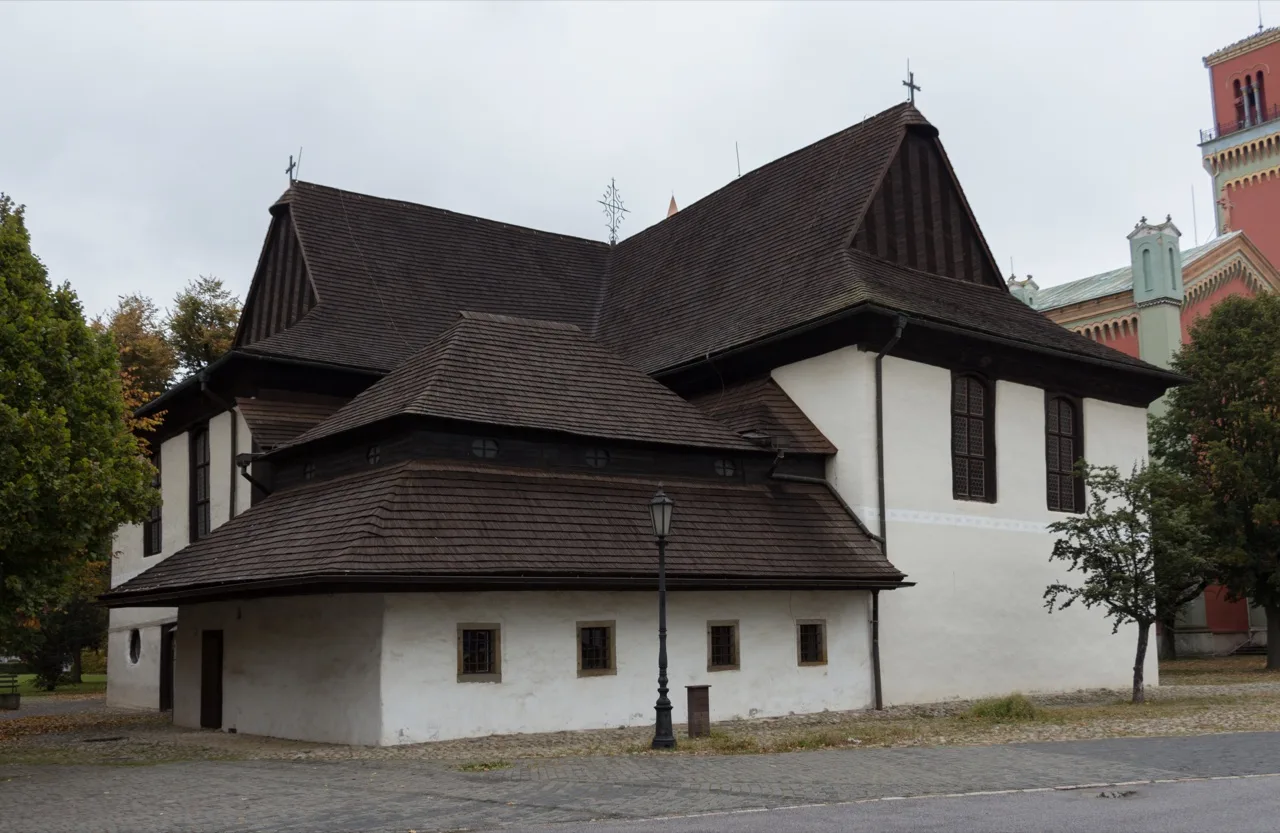
Scattered across the forested hills of northern and eastern Slovakia, a small number of wooden churches represent centuries of a building tradition that used timber joinery instead of nails — and remarkably, many of these structures have survived largely intact for 250 years or more.
What makes them significant
These churches — built by Catholic, Protestant and Orthodox communities alike — represent a shared regional carpentry tradition regardless of denomination. Several are collectively recognised as a UNESCO World Heritage Site for their exceptional preservation and craftsmanship.
Where to see them
Bardejov is the natural base for visiting the wooden churches, both for its own well-preserved historic centre and its proximity to several of the listed sites in the surrounding countryside. The town's Basilica of St Giles gives useful architectural context even though it isn't one of the wooden structures itself.
Planning a visit
Many of the churches sit in small villages with limited public transport, so a rental car or a local guided tour makes visiting several in one day considerably easier than relying on infrequent rural bus routes. Our Bardejov and Bardejovské Kúpele itinerary is a good starting template, adaptable if you want to prioritise church visits over the spa town.
What to expect on arrival
Interiors are often simple by design, but several churches feature detailed hand-painted iconostases and ceiling work that reward a slower look rather than a quick photo stop. Opening hours can be limited outside peak season, so checking ahead — particularly for smaller, less-visited churches — saves a wasted trip.
Further reading
For the full official list and historical background, UNESCO's World Heritage list is the definitive source on which structures are included and why.